
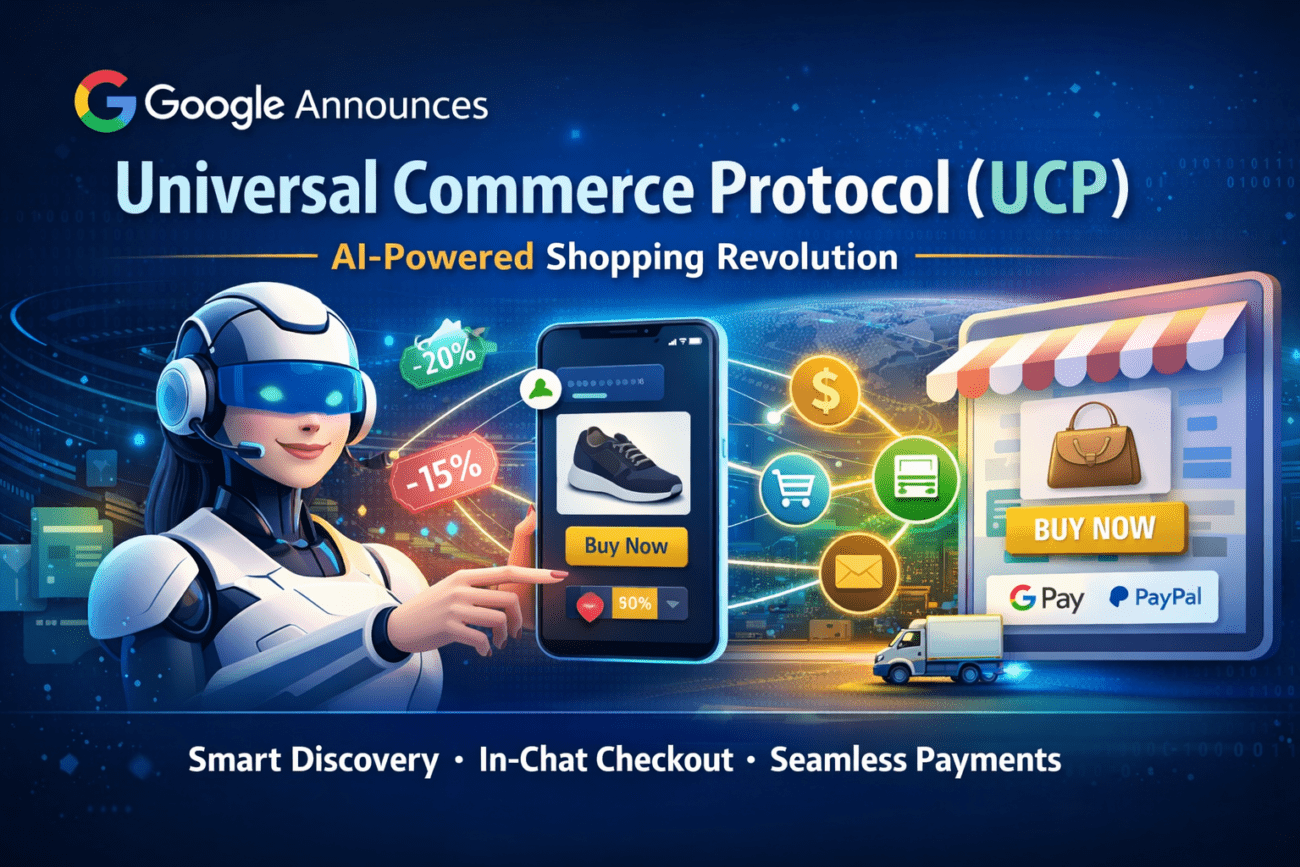
Google has announced a major step forward in AI‑driven commerce with the launch of the Universal Commerce Protocol (UCP) at the National Retail Federation (NRF) conference. Developed in collaboration with leading retailers and platforms like Shopify, Etsy, Wayfair, Target, and Walmart, UCP is designed to simplify how AI agents handle the entire online shopping journey.
This new open standard signals a shift in how consumers discover, evaluate, and purchase products – all within AI‑powered experiences.
What Is the Universal Commerce Protocol (UCP)?
The Universal Commerce Protocol (UCP) is an open standard that allows AI shopping agents to work seamlessly across different stages of the buying process, including:
- Product discovery and recommendations
- Comparing prices and features
- Applying discounts and offers
- Secure checkout and payments
- Post‑purchase support like order tracking and returns
Instead of retailers needing separate integrations for every AI platform or shopping agent, UCP creates a common framework that connects AI systems with merchants more efficiently.
How Google Plans to Use UCP
Google plans to roll out UCP for eligible product listings across:
- Google Search (AI Mode)
- Gemini apps
This means shoppers will soon be able to research and purchase products directly within an AI conversation, without being redirected to multiple websites.
Key Checkout Features
- One‑click checkout using Google Pay
- Automatic use of saved shipping details from Google Wallet
- PayPal support coming soon
For U.S.‑based retailers, this significantly reduces friction in the purchase process and increases conversion opportunities.
Why UCP Matters for Retailers and Brands
1. AI‑Driven Product Discovery
AI agents can now surface products to users even when they weren’t explicitly searching for them. As Shopify CEO Tobi Lütke explained, AI enables serendipitous discovery – helping shoppers find products that perfectly match their needs and preferences.
2. In‑Moment Discounts in AI Search
Google will allow brands to offer real‑time discounts while users are actively seeking product recommendations in AI mode.
For example, if a user searches:
“I’m looking for a modern, easy‑to‑clean rug for a high‑traffic dining room”
Brands can trigger a targeted discount at that exact moment, increasing the likelihood of conversion.
3. Better Visibility in AI Results
Google is introducing new data attributes in Merchant Center, allowing sellers to better optimize how their products appear across AI‑powered search surfaces.
This is especially important as AI chatbots increasingly influence shopping decisions.
Branded AI Business Agents in Google Search
Google is also enabling merchants to integrate AI‑powered Business Agents directly into Google Search. These branded agents can:
- Answer customer questions
- Provide product information
- Assist with support and purchasing decisions
Brands like Lowe’s, Michael’s, Poshmark, and Reebok are already using these AI agents to enhance customer experience.
Gemini Enterprise for Customer Experience (CX)
In addition to UCP, Google announced Gemini Enterprise for Customer Experience (CX) – a new AI suite designed for:
- Retailers
- Restaurants
- E‑commerce brands
The solution helps businesses manage shopping assistance, customer support, and engagement using AI at scale.
The Bigger Picture: AI Is Reshaping Commerce
Google isn’t alone in this shift. Companies like Amazon, Walmart, OpenAI, Meta, and Shopify are all investing heavily in AI‑powered commerce tools.
According to Adobe, traffic driven to merchant sites by generative AI increased by 693% during the recent holiday season, highlighting how quickly AI is influencing shopping behavior.
While the long‑term impact on sales is still evolving, one thing is clear: AI‑assisted shopping is becoming mainstream.
What This Means Going Forward
The launch of the Universal Commerce Protocol marks a transition from traditional e‑commerce to conversational, AI‑first shopping experiences.
For consumers, it means:
- Faster discovery
- Fewer steps to purchase
- More personalized recommendations
For brands, it means:
- New visibility opportunities in AI search
- Higher conversion potential
- Smarter, automated customer interactions
Final Takeaway
Google’s Universal Commerce Protocol is setting the foundation for the future of AI shopping – where discovery, discounts, checkout, and support happen seamlessly within a single AI‑powered experience.
Retailers that adapt early will be best positioned to benefit from this shift.