
Most Google Ads accounts don’t fail because of lack of budget.
They fail because of lack of direction.
Imagine this:
You launch campaigns, traffic starts flowing, clicks look promising—but conversions? Barely moving. Cost per acquisition? Painfully high.
That’s where most marketers either increase budget blindly or give up too soon.
But the ones who win?
They follow a system.
This guide walks you through 8 Google Ads best practices that transform your campaigns from “burning money” to “printing ROI.” Whether you’re just starting or deep into learning Google Ads, this is your playbook.
1. Start with Intent, Not Just Keywords
Most beginners obsess over keywords.
Pros obsess over intent behind the keyword.
There are three types:
- Informational (e.g., “how to run ads”)
- Navigational
- Transactional (e.g., “buy running shoes online”)
👉 If your goal is ROI, focus heavily on high-intent transactional keywords.
Example shift:
- ❌ “Google Ads tips”
- ✅ “hire google ads agency” / “buy google ads services”
Because clicks don’t matter.
Buyer intent does.
2. Structure Campaigns Like a Funnel, Not a Dump Yard
A messy account = wasted budget.
Instead of dumping everything into one campaign, structure it like this:
- Top Funnel → Broad, discovery keywords
- Mid Funnel → Consideration keywords
- Bottom Funnel → High-intent conversion keywords
This allows you to:
- Allocate budget smartly
- Customize messaging
- Improve Quality Score
👉 Think of it like a sales team—not everyone is ready to buy immediately.
3. Master Match Types (This is Where Money is Saved)
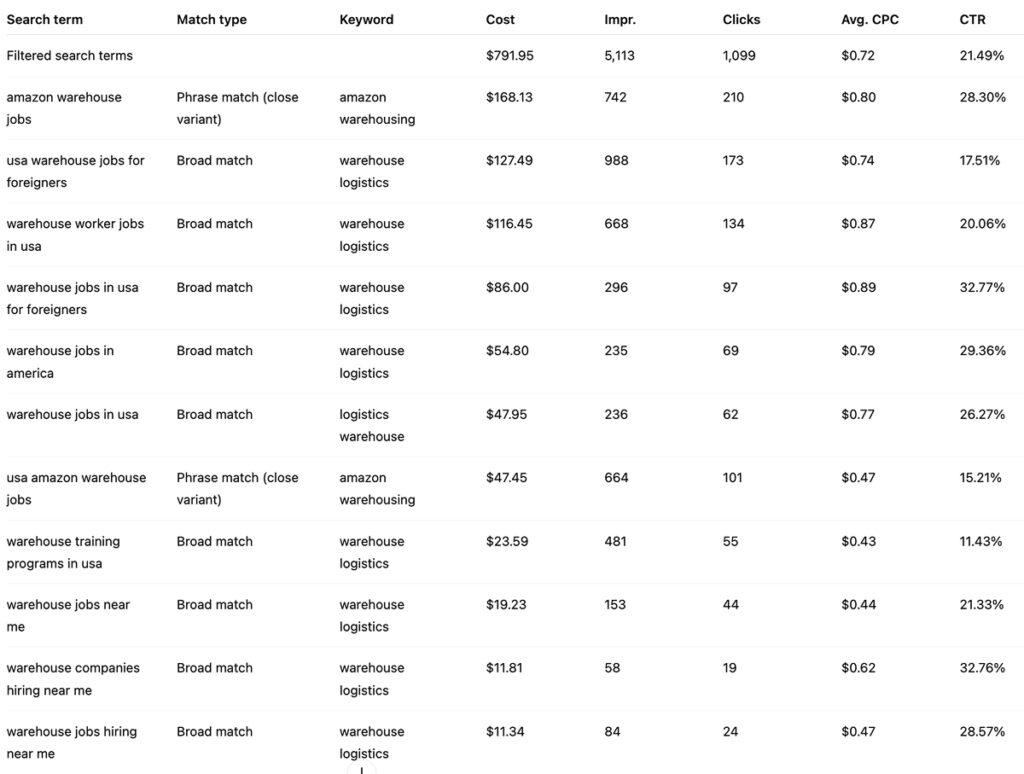
One of the biggest mistakes in learning Google Ads is using Broad Match carelessly.
Here’s the reality:
- Broad Match = reach, but risky
- Phrase Match = balanced control
- Exact Match = precision targeting
Best Practice:
Start tight → Expand later.
Also, aggressively use:
👉 Negative keywords
Because showing ads to the wrong audience is not “testing”
—it’s just burning money politely.
4. Write Ads That Filter, Not Just Attract
Most ads try to get more clicks.
Smart ads try to get the right clicks.
A good ad:
- Calls out the target audience
- Sets expectations clearly
- Pre-qualifies users
Example:
❌ “Best Digital Marketing Services”
✅ “Affordable Google Ads Management for Small Businesses”
Notice what changed?
You’re filtering out irrelevant users before they click.
👉 Result: Higher conversion rate + lower cost per acquisition.
5. Optimize Landing Pages Like Your Business Depends on It (Because It Does)
You can’t out-optimize a bad landing page.
Even the best ads fail if:
- Page is slow
- Messaging mismatch
- No clear CTA
- Poor trust signals
Golden Rule:
👉 Your landing page should continue the same conversation your ad started.
Checklist:
- Same keyword/message as ad
- Fast loading (especially mobile)
- Clear CTA above the fold
- Social proof/testimonials
Google rewards this too → Better Quality Score → Lower CPC.
6. Use Smart Bidding, But Don’t Be Blind
Automation in Google Ads is powerful—but dangerous if misunderstood.
Strategies like:
- Target CPA
- Target ROAS
- Maximize Conversions
Work best when:
👉 You already have enough data.
Beginner mistake:
Jumping to automation too early.
Best Practice:
- Start with Manual / Enhanced CPC
- Gather data
- Then shift to Smart Bidding
Think of it as training the algorithm before trusting it.
7. Track Everything That Matters (Not Just Conversions)
If you’re not tracking properly, you’re guessing.
And guessing is expensive.
Set up:
- Conversion tracking
- Micro conversions (add to cart, scroll, time on page)
- Call tracking (if applicable)
This helps you understand:
👉 What part of the funnel is broken
Because sometimes the issue isn’t ads—
it’s what happens after the click.
8. Ruthlessly Optimize (The Real Game Starts After Launch)
Launching campaigns is step one.
Winning happens in optimization.
Every week, ask:
- Which keywords are wasting spend?
- Which ads have low CTR?
- Which campaigns have high CPA?
Then:
- Pause underperformers
- Reallocate budget
- Test new variations
👉 Google Ads is not a “set and forget” channel.
It’s a continuous improvement engine.
Final Thought: ROAS is Built, Not Found
There’s no secret hack.
No magic setting.
High-performing campaigns come from:
- Understanding user intent
- Structured execution
- Consistent optimization
If you’re serious about learning Google Ads, remember this:
The platform rewards clarity, not complexity.
Get the basics right, stay disciplined, and your ROAS will follow.
-
1. What are the most important Google Ads best practices for beginners?
Focus on keyword intent, proper campaign structure, using negative keywords, and strong landing pages. These fundamentals drive most of your results.
-
2. How can I improve my ROAS in Google Ads?
Improve targeting, optimize ad copy, enhance landing page experience, and continuously eliminate underperforming keywords and ads.
-
3. Is Smart Bidding better than Manual Bidding?
Smart Bidding works well when you have enough data. For new accounts, manual bidding provides better control and learning.
-
4. How long does it take to see results in Google Ads?
You can see initial results within days, but meaningful optimization and stable ROI usually take 4–8 weeks.
-
5. Why am I getting clicks but no conversions?
This usually happens due to poor landing pages, mismatched intent, weak offers, or incorrect targeting—not necessarily bad ads.